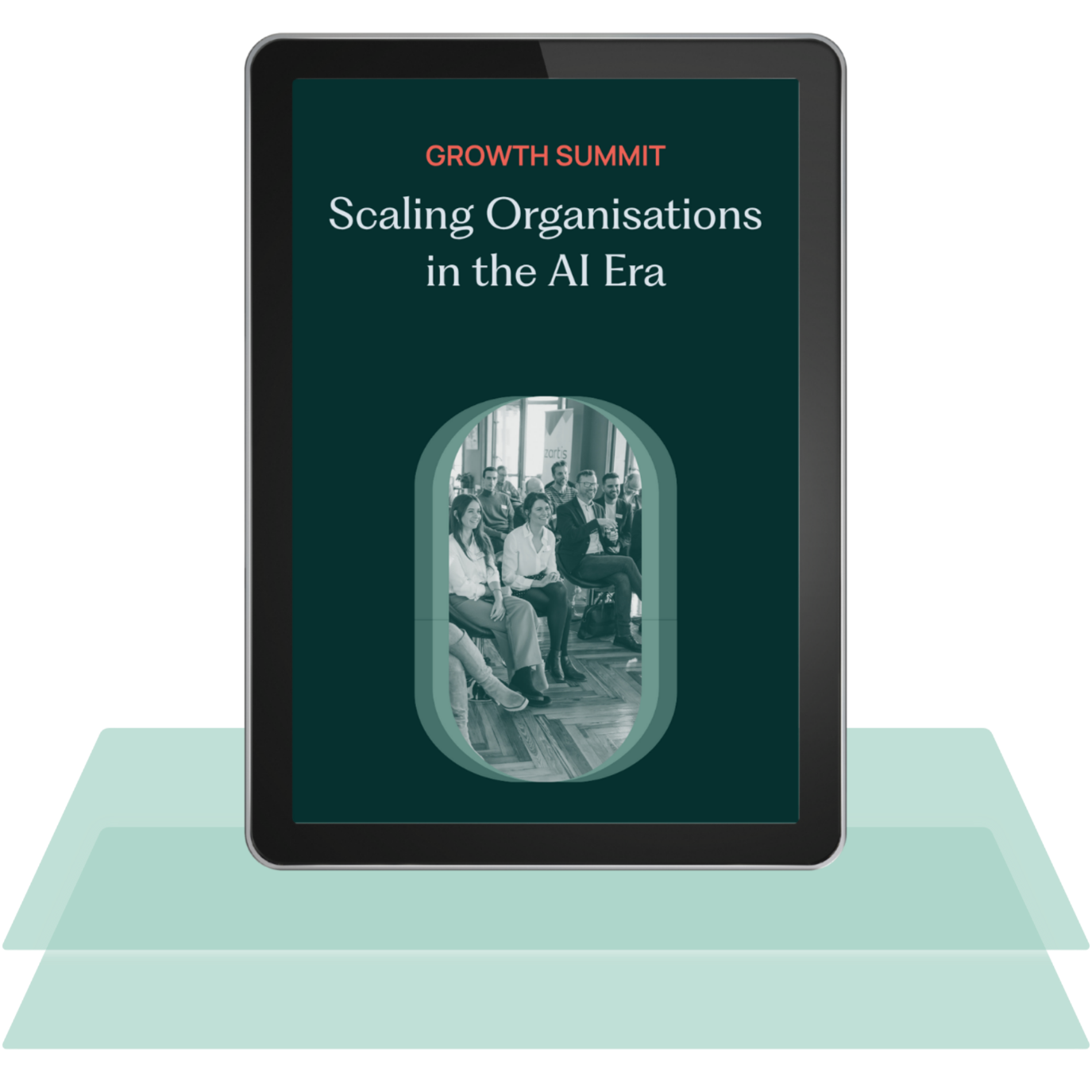

Advanced Techniques for Managing Hallucination and Determinism in LLMs
Only 5% of companies report ROI from GenAI and true control lies in managing the main challenges: hallucination and non-determinism.
Introduction
While Large Language Models (LLMs) are a genuinely transformative technology, a significant gap has opened between exciting proof-of-concepts and the development of reliable, production-grade systems. The technology has been personally transformative. Yet, many organisations find themselves caught in a “frustration loop”: stakeholders, inspired by headlines, request AI solutions. Engineering teams, often given a solution (“build AI”) instead of a problem, deliver a simple agent that works in isolation but fails to scale or solve a meaningful business need.
This cycle of inflated expectations and technical reality leads to scepticism and shelved projects, a challenge reflected in industry reports suggesting that a significant portion of AI proof-of-concepts never reach production, with many organisations struggling to demonstrate clear return on investment from generative AI initiatives. These statistics underscore a critical disconnect between the apparent simplicity of using LLMs and the deep engineering discipline required to deploy them responsibly and effectively.
Overcoming these challenges requires moving beyond surface-level prompting and engaging with LLMs as the complex neural networks they are. True control and reliability are not found in crafting the perfect prompt, but in understanding the underlying mechanics of the models themselves. This document provides a technical blueprint for managing two of the most critical challenges in applied AI: hallucinations and non-determinism. By exploring their underlying mechanics and outlining practical engineering strategies, we can begin to build the robust, predictable, and valuable AI systems that businesses require. We begin by tackling the most pervasive and misunderstood challenge: redefining our understanding of model hallucinations.

Get a practical blueprint for hallucination detection and mitigation.
Learn how to engineer determinism in probabilistic models.
To bridge the gap from a 50% failure rate to realising the transformative potential of AI, engineering and data science leaders should adopt a new set of principles.
Follow these steps for a clear path forward:
Embrace complexity and time
Think in neural networks, not just prompts
Build real, integrable solutions, not demos
Lead with strategy, not with "AI"