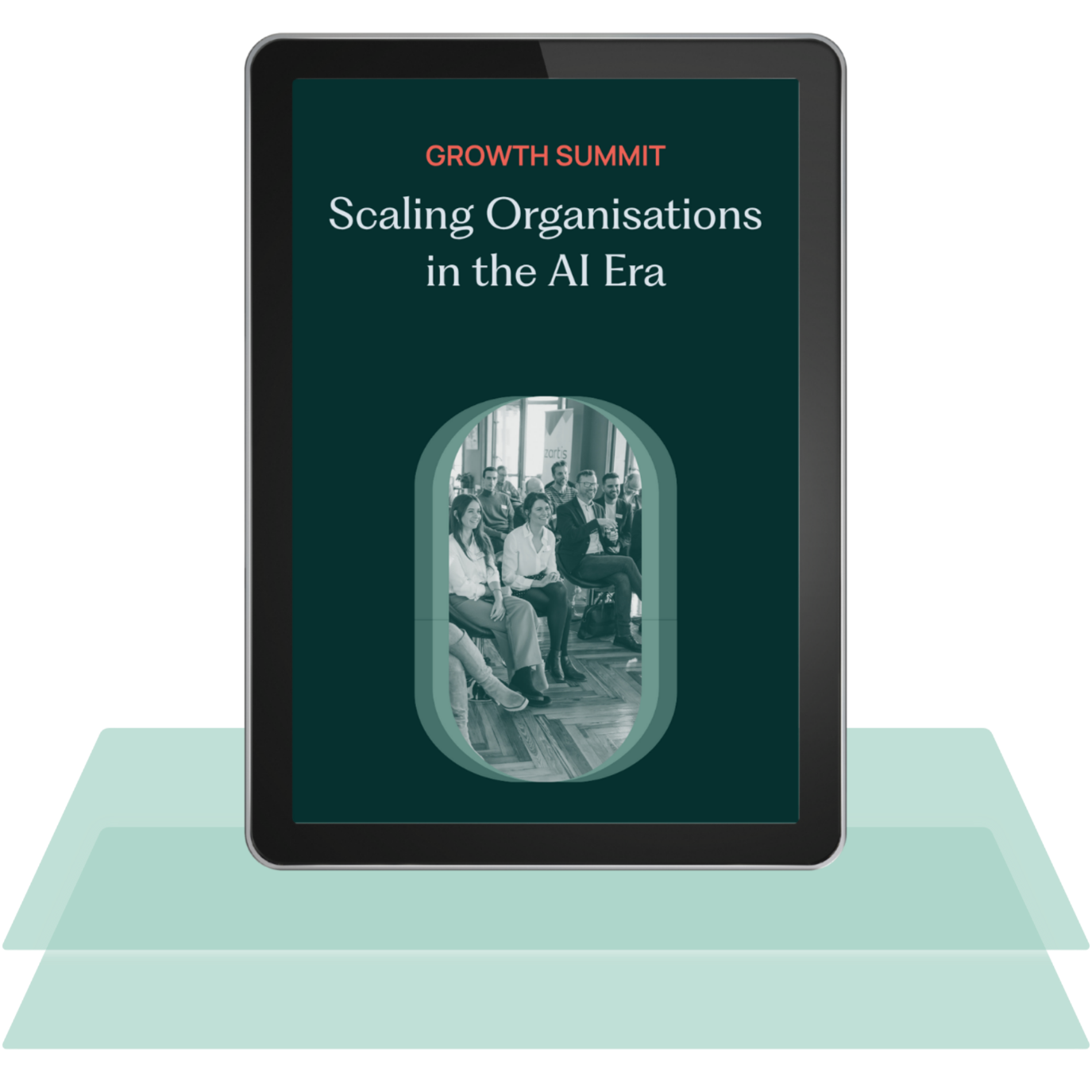
whitepaper on production-grade ai

AI Solutions: From POC to Production

A practical guide on how to successfully move AI solutions from proof-of-concept to production.

Introduction

We can’t ignore one of the most persistent and frustrating realities in the tech world today: the vast majority of Artificial Intelligence Proofs of Concept (POCs) never see the light of day. Citing a sentiment echoed by speakers at the event, industry observations suggest that as many as “95% of POCs just go to dust,” failing to bridge the critical gap between a promising pilot and a functional, value-delivering product.

This “pilot to production gap” is where countless hours and investments disappear, undone by the complex realities of building and shipping real-world AI.

To move beyond the theoretical and into the practical, a panel of industry leaders – Jane Cummings (CTO, Outmin), Charles Kent (Product Design Lead, Evotix), and Darren Hayes (Sr. Director of Digital Development, McKesson) – recently shared their frontline experiences. Their insights cut through the noise, offering candid, sometimes surprising truths about what it really takes to get AI products into the hands of users.

Let’s recap the most important points and draw key takeaways that move beyond the hype to offer a realistic look at what it takes to succeed!

ai poc to production panel of 3 experts
ai poc to production strategies panel with 4 experts

Learn the biggest challenges, essential team structures, build-vs-buy strategies, governance best practices. Discover key principles for delivering scalable, real-world AI products.​

Key findings from our AI production-readiness research:

Most AI POCs fail because real-world AI requires more than a successful demo: it requires strong data foundations, governance, and monitoring.

Effective AI systems are hybrid systems, where human workflows, data pipelines, and model behaviour must be carefully orchestrated.

Leadership alignment is critical: initiatives succeed when tied to clear business value, realistic expectations, and measurable outcomes.

Non-deterministic outputs introduce AI-specific risks, requiring new testing methods, drift monitoring, and error-tolerance strategies.

Sustainable AI delivery requires pragmatic decision-making: knowing when to build, when to buy, and how to adapt to a fast-moving vendor landscape.


Download the whitepaper