Redesigning Your Organisation for AI
The most common AI transformation failure isn't technical, it's structural. Co-authored with Katharine Biddle, Director of Applied AI at Evotix, this paper sets out which dimensions of AI governance to centralise, and which to hand to the functions that actually own the work.
Introduction
The most common AI transformation failure is not technical. It is structural. Organisations pour energy into tool selection, model evaluation, and pilot programmes while leaving the underlying operating model unchanged. When the tools arrive, the structure cannot hold them.
This paper is co-authored with Katharine Biddle, Director of Applied AI at Evotix, and draws directly on the frameworks and operational experience she presented in her keynote at the Zartis AI Summit 2026. Over ten months leading AI transformation at Evotix, Katharine developed a set of operating model principles that address the structural failures most organisations never get around to diagnosing. The paper also draws on a panel of practitioners from WorkHuman, moderated by Phil Thomas, VP of Engineering and AI Transformation at Zartis.
The central argument, grounded in Katharine’s experience at Evotix: the right AI operating model is not centralisation or decentralisation. It’s a deliberate choice about which dimensions of AI governance to centralise and which to push down to the functions that own the work.

Redesigning Your Organisation for AI
Get a practical blueprint for adapting your organisational structure to ensure successful AI adoption.
Learn five lessons from the field, including why 78% of employees are already using AI tools most governance models haven’t accounted for.
Download the extensive report right now!
Whitepaper by:
Co-authored with Katharine Biddle, Director of Applied AI at Evotix
Before choosing an AI operating model, get honest about which dimensions of governance are undefined in your organisation right now.
Follow these steps for a clear path forward:
- Centralise the core AI team, enablement, governance and risk assessment, and the curated tool catalogue
- Decentralise tool selection within that catalogue, ROI ownership, and function-level budget
- Treat AI failures inside a function as a diagnostic signal, not a tooling problem
- Build enablement as content, community, and cadence, not a one-time training session
- Measure AI maturity by workflow embedding and clear ownership, not by tool count
Start your AI transformation journey today
Discover More Whitepapers
Whitepaper
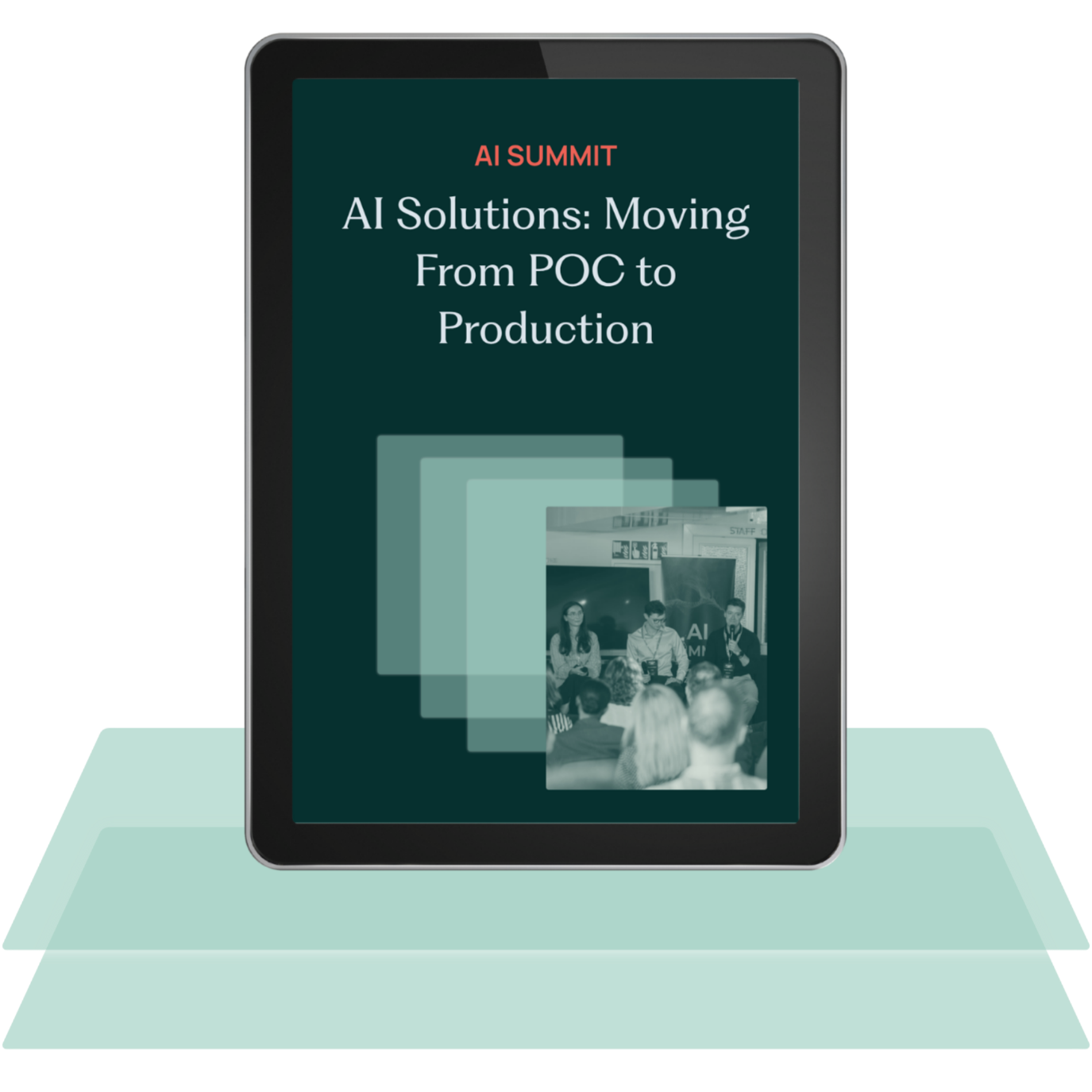
AI Solutions: Moving From POC to Production
This “pilot to production gap” is where countless hours and investments disappear. Discover insights from a panel of industry leaders, who shared their learnings at the 2025 Zartis AI Summit.
Whitepaper
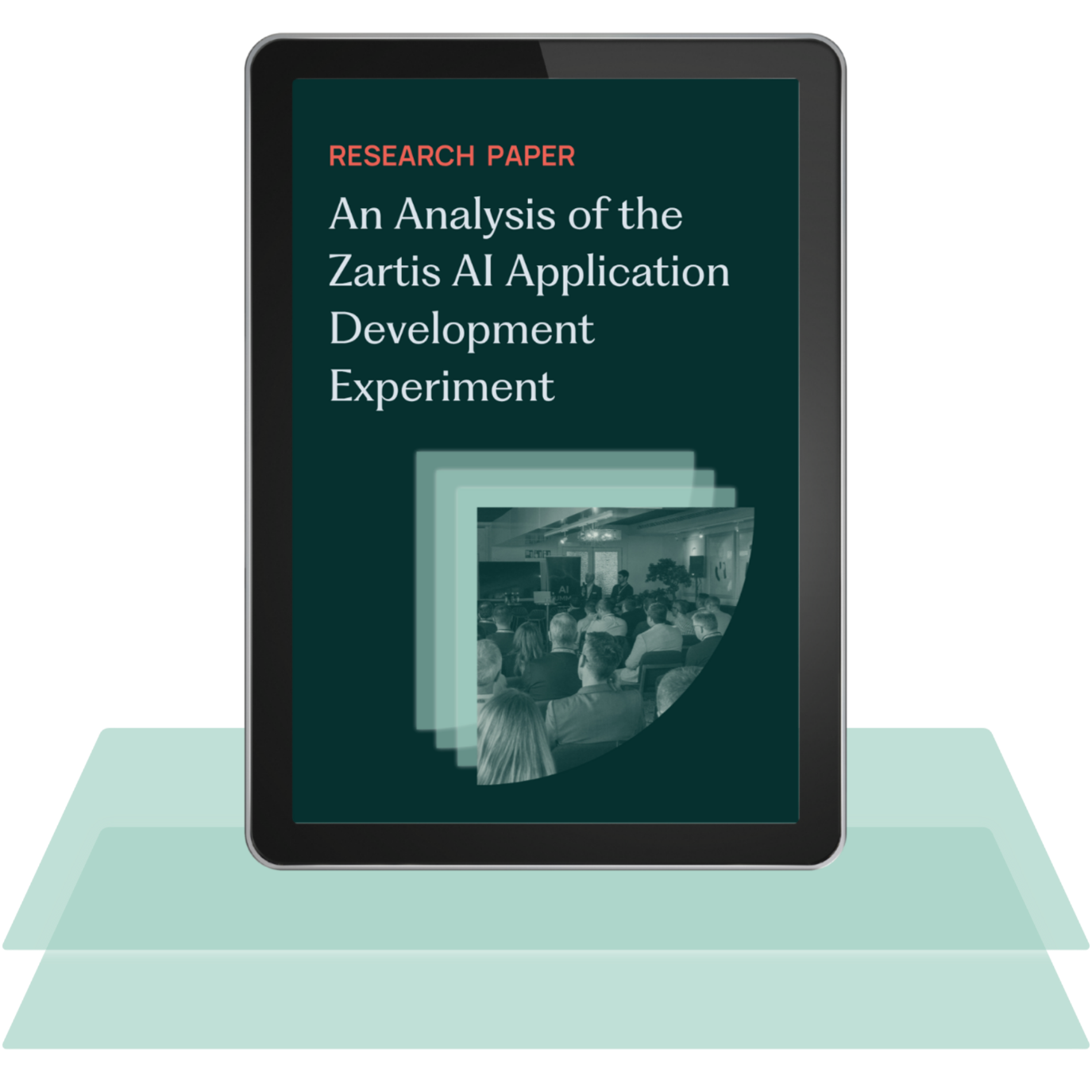
An Analysis of the Zartis AI Application Development Experiment
This whitepaper presents the key learnings from an internal Zartis prototype aimed at building an end-to-end AI application for processing complex Merger & Acquisition documents.