
The Agentic Revolution
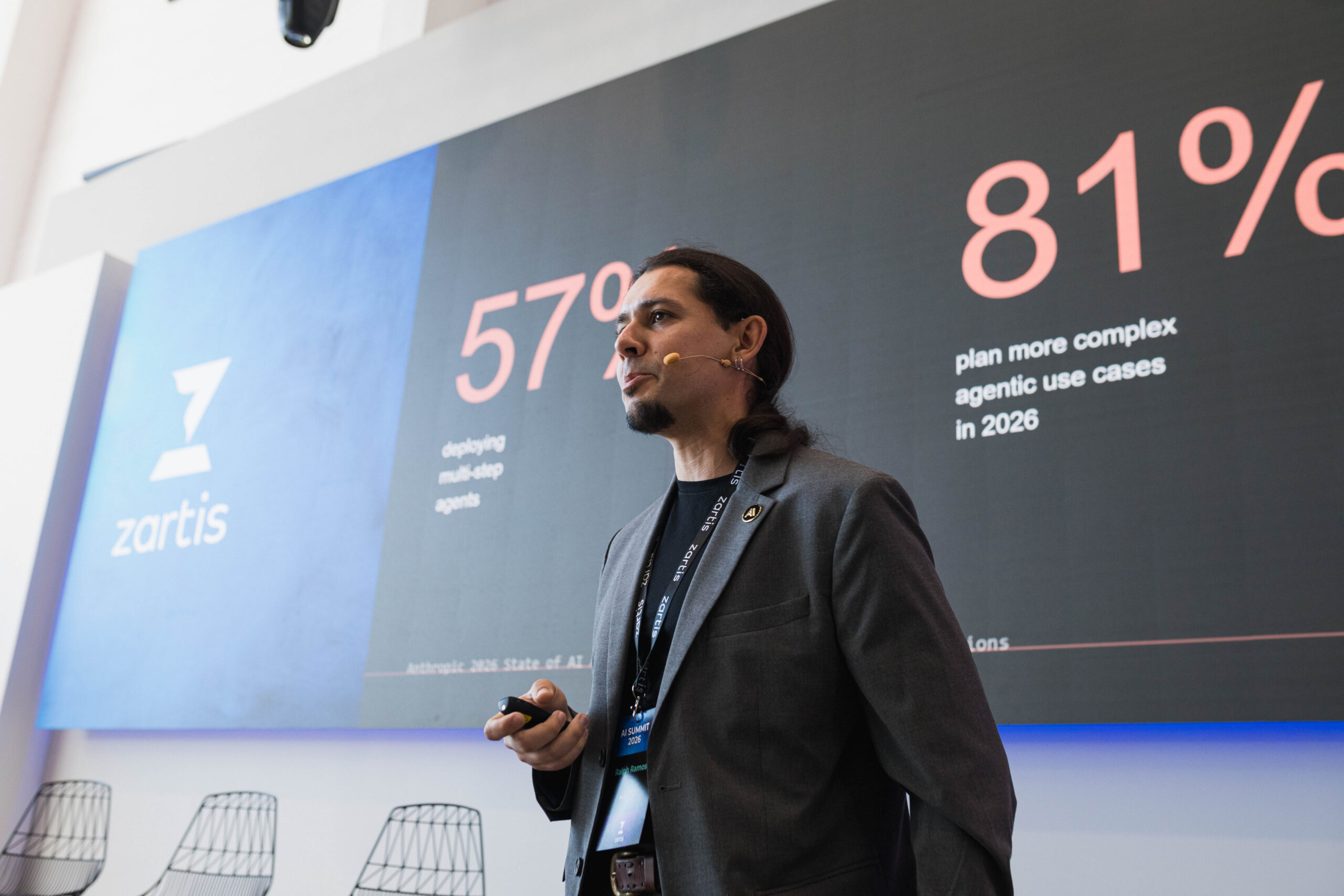
Most organisations are making AI decisions based on capability they evaluated twelve to eighteen months ago. Based on the keynote by Ralph Ramos, Member of Technical Staff at Anthropic, this paper sets out why the model you evaluated and the model you are about to deploy are not the same product, and what that means for governance.
Introduction
Govern for the AI you'll deploy, not the AI you piloted
Get the full paper on why the evaluation cycle most organisations run is built for a product that no longer exists.
Closing the eighteen-month gap between the AI you evaluated and the AI you are about to deploy takes more than awareness of the problem.
Follow these steps for a clear path forward:
Design governance around principles and mechanisms, not around one model version's specific behaviour
Define the categories of action an agent is permitted to take, and the escalation path for when it exceeds them
Treat AI tools already in use across your organisation as a current state to manage, not a future risk to prevent
Make the sanctioned AI path easier to use than the unsanctioned one, rather than trying to restrict access outright
Prepare the wider organisation conceptually, not just technically, before agentic tools reach non-technical workflows
Survey your engineering leadership on what agentic tools are already in daily use, across sanctioned and unsanctioned channels, within the next 30 days
Download the whitepaper