













AI Tools & Use Cases
Identify the right opportunities, and give your people the tools to implement them.


The Right Tools. The Right Use Cases. Real Results.
The AI landscape is crowded. Thousands of tools, endless promises, and no shortage of pilots that go nowhere. What’s missing isn’t technology; it’s clarity about where AI actually adds value and confidence in how to use it day-to-day.
We help organisations move beyond experimentation to adoption that sticks. That means identifying high-impact use cases, matching them to the right tools, and enabling teams to deliver results without creating risk, inconsistency, or wasted effort.
How We Can Help
AI adoption stalls when people don’t know where to start, what tools to use, or how to apply them safely in their actual work. We help you cut through the noise, identify the right opportunities, and put practical tools in the hands of the people who need them.
AI Use Case Discovery
We help teams identify where AI can add real value, then pressure-test feasibility using a simple value–risk–effort lens so you invest in the right opportunities.
Workflow Integration
Move from “we have a tool” to “teams use it daily”. We help embed AI into existing processes without disrupting delivery or creating shadow IT.
Tool Selection & Evaluation
Cut through the noise with structured evaluation that matches AI tools to your workflows, security requirements, and integration constraints, not just feature lists.
Role-Based Mapping
We map AI tools and use cases to specific roles and workflows (product, engineering, QA, operations) so adoption is relevant, not generic.
Safe-Use Playbooks
Practical guidance on data handling, prompt patterns, review processes, and governance-aligned usage to help teams adopt AI confidently.
Monitoring & Iteration
We help you define what success looks like, track actual usage and impact, and refine your approach as teams mature and new opportunities emerge.
Where Organisations Typically Apply AI tools
Discover the most common use cases we see and deliver for.
Research & Analysis
Accelerate competitive research, market analysis, document review, and synthesis tasks that traditionally consume hours of manual effort.
Content & Communication
Draft, refine, and adapt written content – from internal communications to customer-facing materials – with consistent quality and faster turnaround.
Engineering & Development
Improve developer output through AI-assisted coding, code review support, documentation generation, and refactoring.
Product & Design
Speed up requirements gathering, user story creation, design exploration, and decision documentation across product teams.
Testing & Quality
Generate test cases, identify coverage gaps, analyse failures, and improve quality signals earlier in the pipeline.
Operations & Support
Automate routine queries, summarise tickets, surface insights from support data, and reduce response times without adding headcount.
Case studies
Delivering Tangible Business Value
Trusted by Industry Leaders
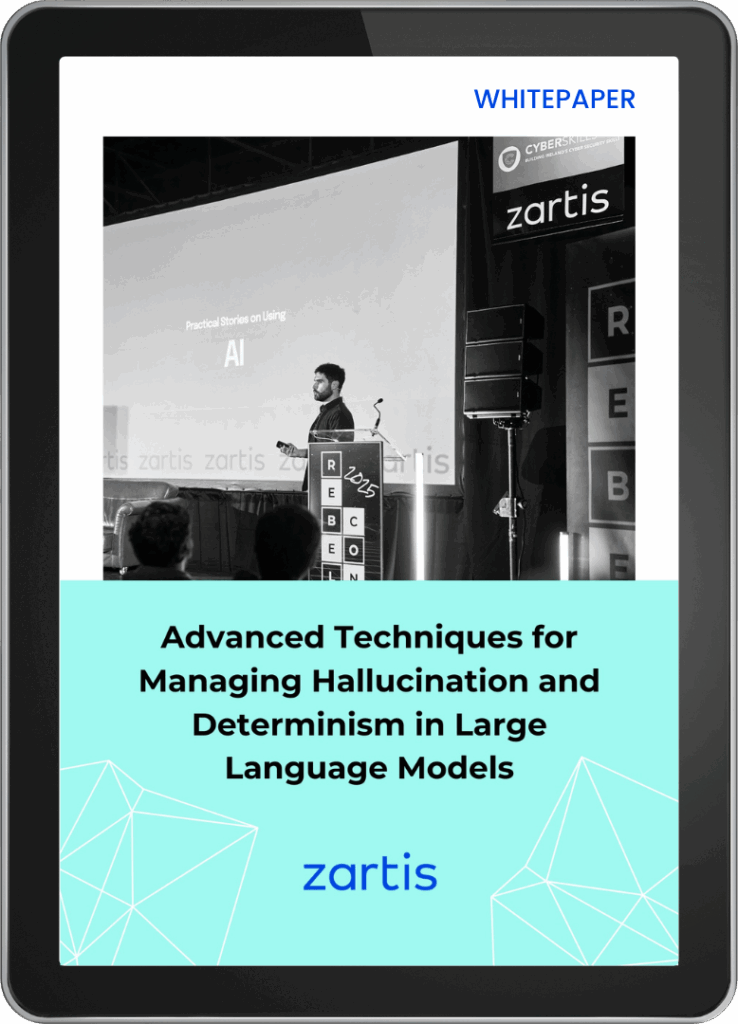
Managing Hallucinations and Determinism in LLMs
True control and reliability are found in understanding the underlying mechanics of LLMs. Get a technical blueprint for managing two of the most critical challenges in applied AI—hallucinations and non-determinism.
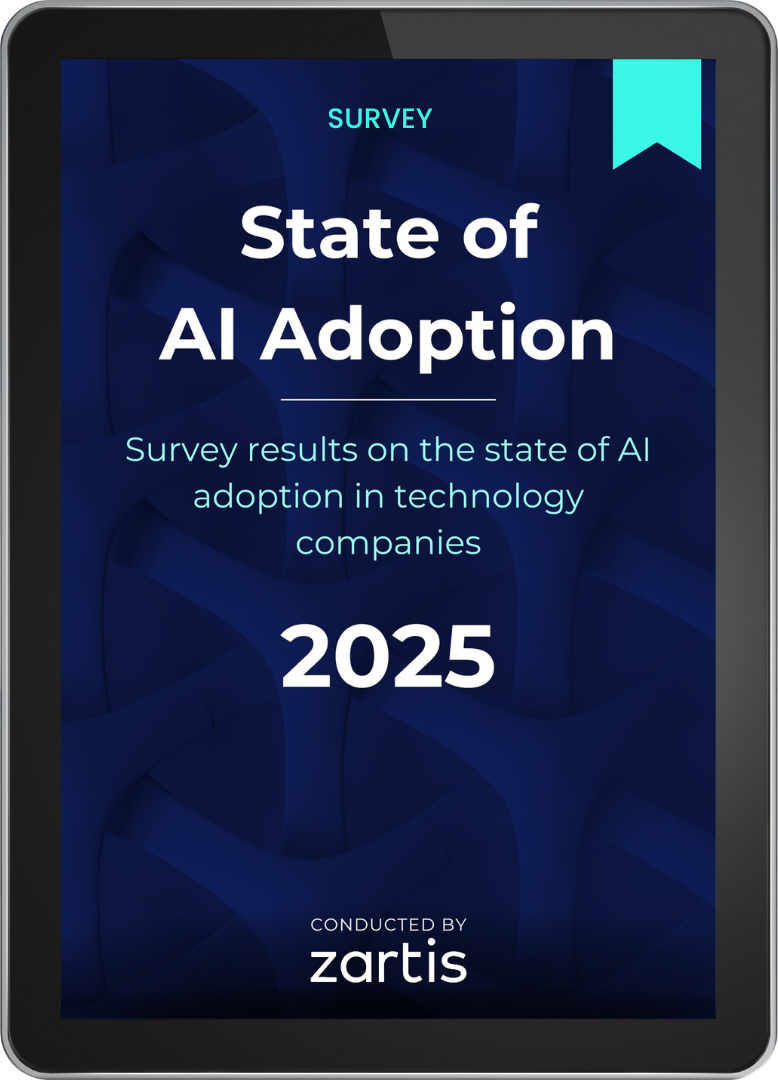
State of AI Adoption 2025 Survey
We surveyed 100 CTOs, Heads of Engineering, and senior product leaders across Europe to understand how companies are leveraging AI, what barriers they face, and what strategies they are prioritising for the road ahead.
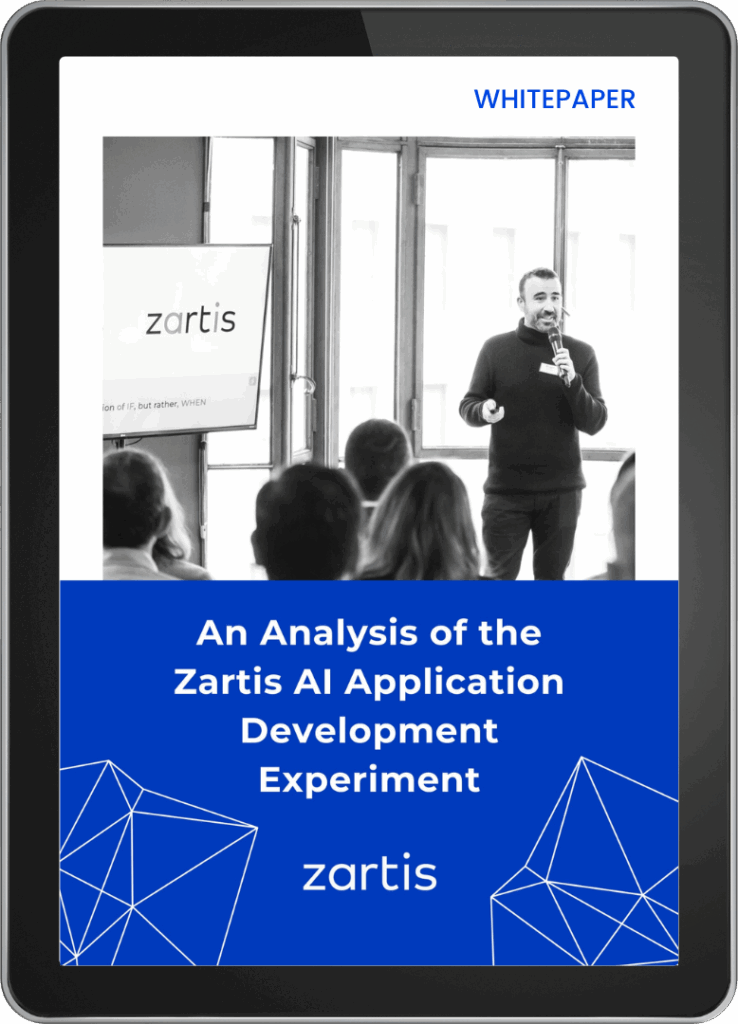
Analysis of the Zartis AI App Development Experiment
This white paper presents the key learnings from an internal Zartis experiment aimed at building an end-to-end AI application for processing complex Merger & Acquisition (M&A) Information Memorandums (CIMs)
AI Insights from Our Team
Discover how engineering determinism transforms LLMs from unpredictable generators into reliable, production-ready systems.

Let's deconstruct the myth of “randomness” in LLMs to get a technically grounded view - demonstrating engineered determinism.
A practical industry report on context engineering—combining retrieval, memory, tools, and prompt design to scale and govern LLM and agent systems.
Synthetic data generation produces artificial data that mirrors the statistical properties of real datasets to simulate complex scenarios.
Discover why data validation is essential for business success. Learn key techniques, real-world benefits, challenges, and how verified data drives efficiency, compliance, and competitive advantage.
Discover how AI-powered design tools are transforming the early stages of product development — and what it means for your team.
FAQs: AI Tools & Use Cases
How do you help us choose between so many AI tools?
We don’t evaluate every tool on the market. We start with your workflows and constraints, then identify the tools that actually fit. This avoids analysis paralysis and ensures recommendations are practical, not theoretical.
Is this technology-agnostic?
Yes. We focus on outcomes and workflows first, then match tools to requirements. We’re not tied to any vendor, though we can go deeper on specific platforms (like Claude) where it makes sense.
How do you handle security and compliance concerns?
We treat these as design constraints from day one. Use case discovery includes risk assessment, and our playbooks explicitly address data handling, access control, and governance-aligned usage patterns.
What if we don't know where AI should be used?
That’s exactly what use case discovery is for. We work with your teams to identify opportunities, validate feasibility, and prioritise the ones that will deliver measurable value, so you’re not just guessing. This also informs which AI tools we suggest your team, as we pick the right tool for the right job.
Can you help with adoption, not just selection?
Absolutely. Tool selection without enablement is shelf-ware. We help teams actually use what’s selected – through playbooks, coaching, and ongoing support that turns training into behaviour change.
How does this relate to AI Workshops by Zartis?
Think of this as the “what” and workshops as the “how.” We help you identify the right tools and use cases; workshops build the practical skills to use them effectively. They’re complementary and often delivered together.
Stop experimenting. Start adopting.
Let's identify where AI tools can genuinely help your teams, and put practical capability in place to make it happen.